About
UX Case Studies
Lauren Salk’s
Portfolio
Case Study: A New Vertical in a Top Grossing Live Game
The “Heroes” Feature
THE CHALLENGE:
Insert a new highly profitable vertical into a live game with an existing framework of success, without disrupting the core game.
Background
The “Heroes” feature was a major addition to Game of Thrones: Conquest, a live mobile title with a large established player base and complex existing UI system.
The UX challenges of hierarchy, navigation, and integration into an existing interface needed to be solved. I worked in Figma to create the wireframes, prototypes, IA, and design system updates for this large feature.
The Problems
The Heroes feature had to prioritize the following goals against existing systems, while also making something slick, enticing, and exciting for players.

Clarity
Players needed to quickly parse hero information and actions.

Consistency
Patterns had to align with existing UI, much of which was undocumented and piecemeal.

Scalability
This feature had to open the door for future expansions.
Internal UX Process
Handoffs were unclear, components were ad-hoc, and teams often had to redo work.
My Role
My role was to design the UX. Here’s what I did:
- Created the information architecture for the feature
- Created all wireframes
- Expanded our Figma component library to incorporate this feature and maintain the UX standards for the live game
- Produced design specs (documentation) to hand off to engineers and artists
- Helped refine the UX process with communication and stakeholder reviews
My Process
I helped bring order to the chaos of the “ideation ←> iteration” challenge that exists in tools. After initial requirement-gathering and brainstorms, I do meticulous documentation to ensure a source of truth. After the source of truth is defined and agreed upon, communication is crucial with teams downstream of this work.
💡
Understanding Requirements
I worked closely with PMs and system designers to translate game design goals into UX needs, identifying what players must see at a glance.
✏️
Wireframes & IA
I explored layouts to prioritize readability and hierarchy, testing flows against common player actions (selecting heroes, viewing stats, applying upgrades).
🎛️
Component Library Expansion
The existing library lacked patterns for a feature of this scope. I built new reusable components that supported Heroes and set groundwork for future features.
📄
Documentation & Handoff
I created detailed specifications, annotated flows, and state documentation so UI designers and engineers could implement without ambiguity.
⏩
Improving the Process
Alongside the feature work, I championed more consistent use of components and clearer UX → UI handoff steps. This reduced rework and unblocked teammates.
Solution
While the visual polish was handled by dedicated UI artists, the underlying UX framework I delivered ensured the feature was clear, consistent, and maintainable.
The final deliverables included:
- Wireframes and interactive prototypes showcasing the full Heroes flow.
- Information architecture for hero stats, actions, and navigation.
- Expanded Figma components tailored for scalability.
- Documentation packs with behaviors and states.
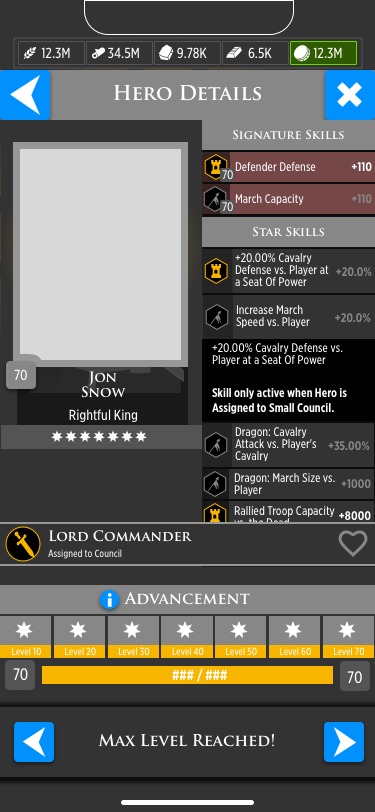
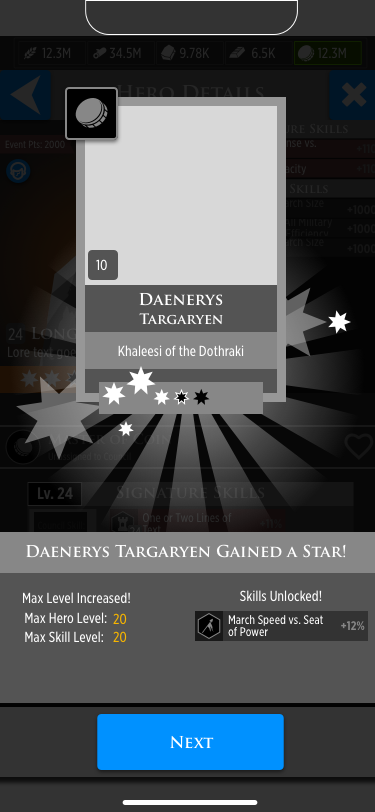
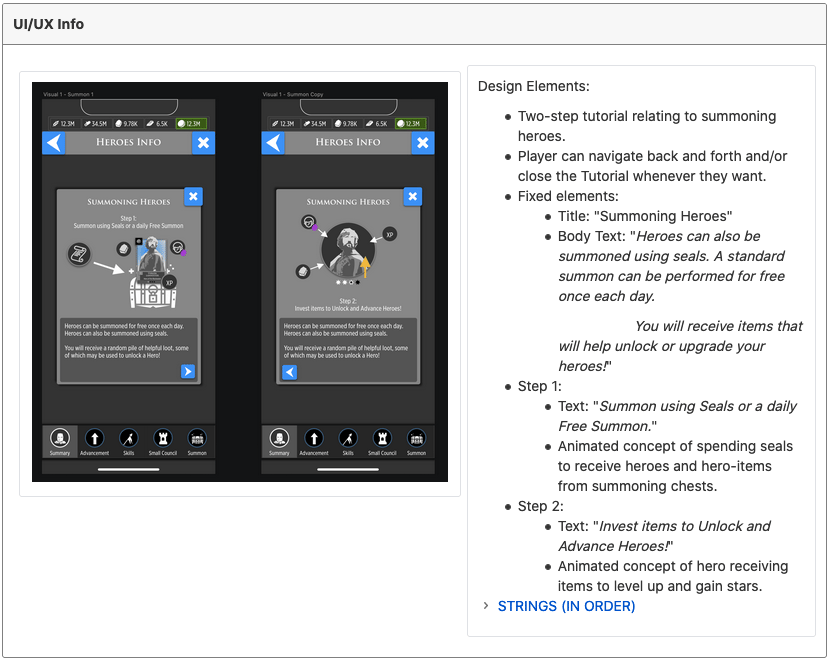
These are some final wireframes for the feature, and a writeup in Confluence for handoff.
Results
- Delivered a shippable UX for an important new vertical in a live game.
- Helped GOTC surpass its revenue targets for 2020, the year that the Heroes Feature launched, largely due to the success of Heroes.
- Reduced rework and confusion thanks to clearer documentation and handoff.
- Improved collaboration between UX, UI, and engineering.
- Strengthened the design system with reusable components.
- Helped transform a frustrating UX process into one the team could trust.
About
UX Case Studies
Lauren Salk’s
Portfolio
About
UX Case Studies
Lauren Salk’s Portfolio
Case Study: A New Vertical in a Top Grossing Live Game
The “Heroes” Feature
THE CHALLENGE:
Insert a new highly profitable vertical into a live game with an existing framework of success, without disrupting the core game.
Background
The “Heroes” feature was a major addition to Game of Thrones: Conquest, a live mobile title with a large established player base and complex existing UI system.
The UX challenges of hierarchy, navigation, and integration into an existing interface needed to be solved. I worked in Figma to create the wireframes, prototypes, IA, and design system updates for this large feature.
The Problems
The Heroes feature had to prioritize the following goals against existing systems, while also making something slick, enticing, and exciting for players.
Clarity
Players needed to quickly parse hero information and actions.
Consistency
Patterns had to align with existing UI, much of which was undocumented and piecemeal.
Scalability
This feature had to open the door for future expansions.
Internal UX Process
Handoffs were unclear, components were ad-hoc, and teams often had to redo work.
My Role
My role was to design the UX. Here’s what I did:
- Created the information architecture for the feature
- Created all wireframes
- Expanded our Figma component library to incorporate this feature and maintain the UX standards for the live game
- Produced design specs (documentation) to hand off to engineers and artists
- Helped refine the UX process with communication and stakeholder reviews
My Process
I helped bring order to the chaos of the “ideation ←> iteration” challenge that exists in tools. After initial requirement-gathering and brainstorms, I do meticulous documentation to ensure a source of truth. After the source of truth is defined and agreed upon, communication is crucial with teams downstream of this work.
💡
Understanding Requirements
I worked closely with PMs and system designers to translate game design goals into UX needs, identifying what players must see at a glance.
✏️
Wireframes & IA
I explored layouts to prioritize readability and hierarchy, testing flows against common player actions (selecting heroes, viewing stats, applying upgrades).
🎛️
Component Library Expansion
The existing library lacked patterns for a feature of this scope. I built new reusable components that supported Heroes and set groundwork for future features.
📄
Documentation & Handoff
I created detailed specifications, annotated flows, and state documentation so UI designers and engineers could implement without ambiguity.
⏩
Improving the Process
Alongside the feature work, I championed more consistent use of components and clearer UX → UI handoff steps. This reduced rework and unblocked teammates.
Solution
While the visual polish was handled by dedicated UI artists, the underlying UX framework I delivered ensured the feature was clear, consistent, and maintainable.
The final deliverables included:
- Wireframes and interactive prototypes showcasing the full Heroes flow.
- Information architecture for hero stats, actions, and navigation.
- Expanded Figma components tailored for scalability.
- Documentation packs with behaviors and states.
These are some final wireframes for the feature, and a writeup in Confluence for handoff.
Results
- Delivered a shippable UX for an important new vertical in a live game.
- Helped GOTC surpass its revenue targets for 2020, the year that the Heroes Feature launched, largely due to the success of Heroes.
- Reduced rework and confusion thanks to clearer documentation and handoff.
- Improved collaboration between UX, UI, and engineering.
- Strengthened the design system with reusable components.
- Helped transform a frustrating UX process into one the team could trust.
About
UX Case Studies
Lauren Salk’s Portfolio
About
UX Case Studies
Lauren Salk’s Portfolio
Case Study: A New Vertical in a Top Grossing Live Game
The “Heroes” Feature
THE CHALLENGE:
Insert a new highly profitable vertical into a live game with an existing framework of success, without disrupting the core game.
Background
The “Heroes” feature was a major addition to Game of Thrones: Conquest, a live mobile title with a large established player base and complex existing UI system.
The UX challenges of hierarchy, navigation, and integration into an existing interface needed to be solved. I worked in Figma to create the wireframes, prototypes, IA, and design system updates for this large feature.
The Problems
The Heroes feature had to prioritize the following goals against existing systems, while also making something slick, enticing, and exciting for players.
Clarity
Players needed to quickly parse hero information and actions.
Consistency
Patterns had to align with existing UI, much of which was undocumented and piecemeal.
Scalability
This feature had to open the door for future expansions.
Internal UX Process
Handoffs were unclear, components were ad-hoc, and teams often had to redo work.
My Role
My role was to design the UX. Here’s what I did:
- Created the information architecture for the feature
- Created all wireframes
- Expanded our Figma component library to incorporate this feature and maintain the UX standards for the live game
- Produced design specs (documentation) to hand off to engineers and artists
- Helped refine the UX process with communication and stakeholder reviews
My Process
I helped bring order to the chaos of the “ideation ←> iteration” challenge that exists in tools. After initial requirement-gathering and brainstorms, I do meticulous documentation to ensure a source of truth. After the source of truth is defined and agreed upon, communication is crucial with teams downstream of this work.
💡
Understanding Requirements
I worked closely with PMs and system designers to translate game design goals into UX needs, identifying what players must see at a glance.
✏️
Wireframes & IA
I explored layouts to prioritize readability and hierarchy, testing flows against common player actions (selecting heroes, viewing stats, applying upgrades).
🎛️
Component Library Expansion
The existing library lacked patterns for a feature of this scope. I built new reusable components that supported Heroes and set groundwork for future features.
📄
Documentation & Handoff
I created detailed specifications, annotated flows, and state documentation so UI designers and engineers could implement without ambiguity.
⏩
Improving the Process
Alongside the feature work, I championed more consistent use of components and clearer UX → UI handoff steps. This reduced rework and unblocked teammates.
Solution
While the visual polish was handled by dedicated UI artists, the underlying UX framework I delivered ensured the feature was clear, consistent, and maintainable.
The final deliverables included:
- Wireframes and interactive prototypes showcasing the full Heroes flow.
- Information architecture for hero stats, actions, and navigation.
- Expanded Figma components tailored for scalability.
- Documentation packs with behaviors and states.
These are some final wireframes for the feature, and a writeup in Confluence for handoff.
Results
- Delivered a shippable UX for an important new vertical in a live game.
- Helped GOTC surpass its revenue targets for 2020, the year that the Heroes Feature launched, largely due to the success of Heroes.
- Reduced rework and confusion thanks to clearer documentation and handoff.
- Improved collaboration between UX, UI, and engineering.
- Strengthened the design system with reusable components.
- Helped transform a frustrating UX process into one the team could trust.
About
UX Case Studies
Lauren Salk’s Portfolio